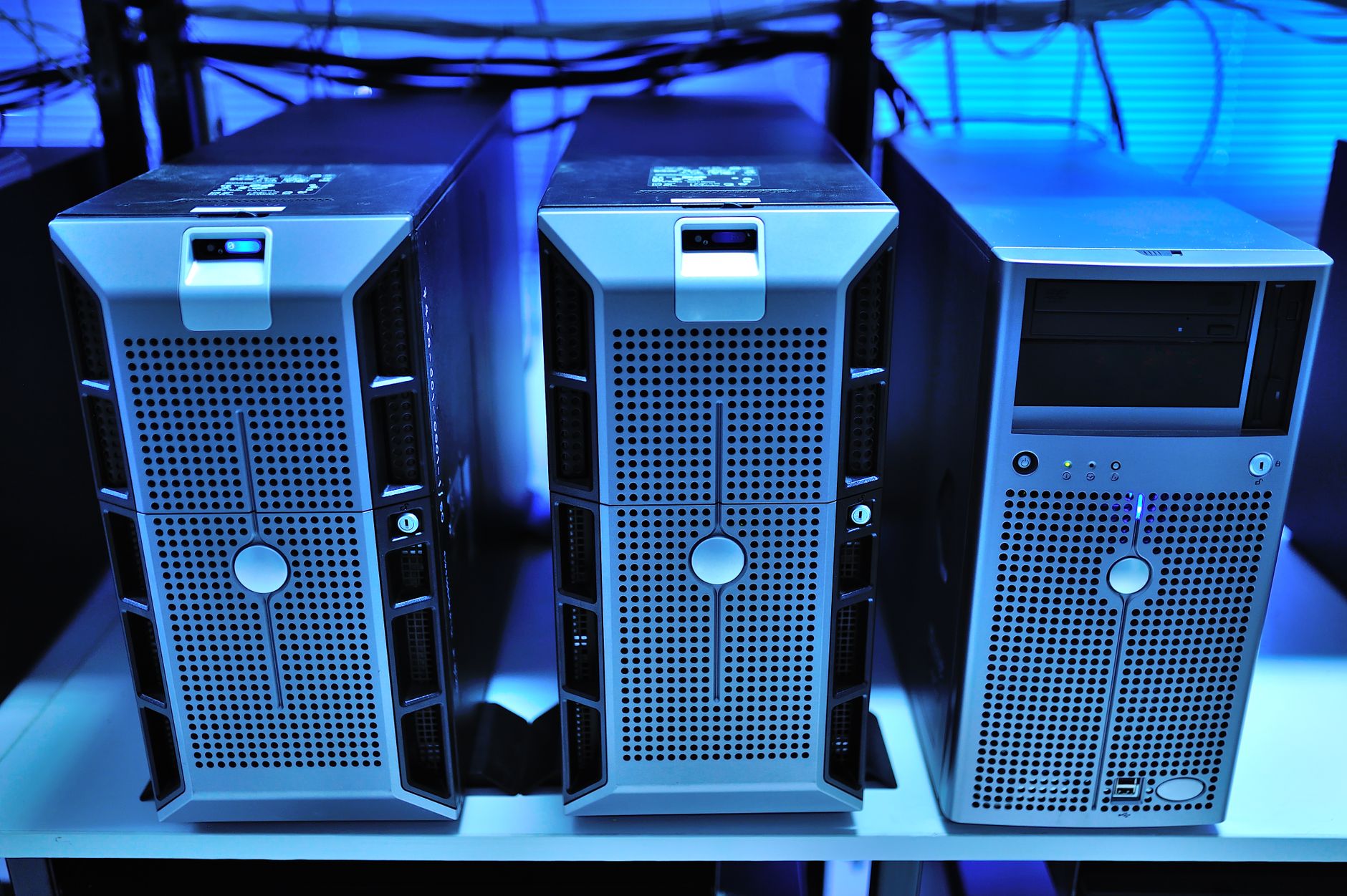
Understanding Dedicated Server Hosting for E-Commerce

When an online store scales to a certain threshold of daily visitors, transactional volume, and catalog size, standard web hosting environments inevitably begin to buckle under the strain. To maintain optimal site performance, lightning-fast page load times, and a seamless checkout experience, growing e-commerce businesses must transition away from entry-level architectures and look toward enterprise-grade infrastructure. At the apex of this infrastructure pyramid sits dedicated server hosting, a robust solution that provides an online store with exclusive, unshared use of an entire physical machine. Understanding how this model fundamentally differs from other hosting tiers is essential for any merchant aiming to future-proof their digital storefront, especially when evaluating options outlined in resources like the Best Hosting for Online Stores in 2026: Complete Guide.
To truly appreciate the value of a dedicated server, one must first examine the inherent limitations of shared hosting and Virtual Private Servers (VPS). In a shared hosting environment, hundreds or even thousands of distinct websites are crammed onto a single physical server, all vying for the same pool of processor cores, memory, and disk Input/Output operations. If a neighboring website experiences a sudden traffic surge or runs a resource-heavy script, the entire server’s performance can degrade, causing your online store to slow down or even crash. Even Virtual Private Servers, which use virtualization software to partition a physical machine into isolated virtual environments, still suffer from virtualization overhead and underlying hardware sharing. While a VPS offers more control and better isolation than shared hosting, you are ultimately still neighbors with other virtual instances, meaning that physical resource contention can still occasionally rear its head during peak shopping seasons like Black Friday or Cyber Monday.
In stark contrast, dedicated server hosting eliminates these variables entirely by granting your e-commerce operation undisputed dominion over the hardware. With a dedicated setup, every single component of the physical machine—every single gigabyte of RAM, every clock cycle of the CPU, every input/output operation on the storage drives, and every megabit of network bandwidth—is allocated exclusively to your store. There are no “noisy neighbors” stealing your processing power, no unpredictable virtualization lag, and no unexpected performance bottlenecks caused by external tenants on the same motherboard. This total hardware isolation guarantees that your database queries execute swiftly, your product catalogs render instantaneously, and your secure payment gateways process transactions without delay, aligning with the principles detailed in guides covering 7 Key Benefits of Dedicated Server Hosting.
To visualize how dedicated servers stack up against lesser hosting tiers across core performance metrics, consider the structural differences outlined below:
| Hosting Tier | Resource Allocation | Isolation Level | Susceptibility to Neighbor Traffic | Best Suited For |
|---|---|---|---|---|
| Shared Hosting | Pooled among hundreds of sites | None (Software-based directories) | Extremely High | Small blogs, startup brochure sites |
| VPS Hosting | Partitioned slices of a physical machine | Moderate (Hypervisor isolation) | Low to Moderate | Medium blogs, growing portfolio sites |
| Dedicated Server | 100% exclusive to one user | Absolute (Physical hardware isolation) | Zero | High-traffic e-commerce, enterprise apps |
The absence of resource contention translates directly into superior reliability and uptime for high-volume merchants. When thousands of concurrent shoppers are adding items to their carts, applying coupon codes, and checking out simultaneously, e-commerce platforms like Magento, WooCommerce, or Shopify Plus (when self-hosted) place an immense strain on server memory and database write operations. On a shared or VPS setup, this workload can quickly exhaust allocated limits, leading to HTTP 500 errors or database connection timeouts precisely when revenue is on the line. Dedicated servers absorb these traffic spikes with remarkable resilience, ensuring that your conversion funnel remains open and frictionless around the clock.
Furthermore, opting for a dedicated server provides e-commerce administrators with unprecedented flexibility in software configuration, security hardening, and resource optimization. Because you have root or administrator access to the machine, you are not bound by the restrictive software limitations imposed by shared hosting providers. You can install custom caching mechanisms like Redis or Memcached, optimize your PHP-FPM settings to match your exact traffic patterns, implement rigorous web application firewalls (WAF), and configure specialized database indexing. For merchants diving deeper into these configurations, comprehensive breakdowns such as What Is Dedicated Hosting? The Complete Guide for 2026 illustrate how tailoring the software stack to dedicated hardware yields exponential performance gains. By matching enterprise-grade hardware with bespoke software tuning, high-traffic online stores can achieve the blistering speeds required to satisfy modern consumer expectations and maximize search engine visibility.
When Your Online Store Needs to Upgrade to a Dedicated Server
For e-commerce, dedicated servers are usually recommended when traffic is consistently high or seasonal spikes are large enough that shared hosting or VPS plans can no longer keep up. As an online retail enterprise expands, its underlying digital infrastructure faces exponentially greater demands. Deciding the exact moment to transition away from entry-level hosting environments is a critical pivot point for business continuity, customer satisfaction, and revenue protection. When a store first launches, shared hosting and virtual private servers (VPS) offer an affordable and manageable starting point. However, these shared environments inherently limit resource allocation, meaning that as your business gains traction, you will inevitably encounter technical and financial boundaries that threaten growth. Recognizing these operational thresholds early prevents catastrophic site crashes during peak shopping hours and ensures a seamless buyer journey.
One practical trigger for upgrading is sustained traffic above about 100,000 monthly visitors, which several sources identify as a point where dedicated hosting becomes a strong fit. When monthly unique visitors cross this threshold, resource contention on a VPS or shared server becomes a persistent bottleneck. CPU cores and RAM allocations that once handled browsing traffic effortlessly will begin to struggle under concurrent user requests, particularly during high-intent shopping sessions involving real-time cart updates, secure checkout processing, and dynamic database queries. If your analytics show a steady upward trend in traffic without a proportional increase in conversion rates, server latency and sluggish page load speeds are often the hidden culprits driving potential buyers away before they can complete a purchase.
Beyond raw visitor counts, business milestones provide an equally reliable compass for infrastructural upgrades. Some e-commerce guidance also uses business metrics: monthly revenue above about €10,000 is cited as a threshold where dedicated-server cost becomes small relative to store revenue. At this level of financial maturity, investing in enterprise-grade hosting is no longer an unnecessary luxury, but rather a vital insurance policy against lost sales. When an hour of downtime can translate directly into thousands of euros in forfeited revenue, the fixed monthly expense of a dedicated server represents a minor fraction of overall operational turnover. This financial breathing room allows store owners to justify the superior security isolation, hardware customizability, and guaranteed resource availability that only a dedicated machine can provide.
Furthermore, operational complexity within the catalog and backend infrastructure dictates hosting requirements. A dedicated server is commonly recommended for stores with over 1,000 products or advanced integrations such as ERP, CRM, or logistics systems. Managing a massive inventory with thousands of stock-keeping units (SKUs), multiple product variations, rich media galleries, and real-time stock synchronization places a heavy burden on database performance. When you couple a large catalog with sophisticated third-party connections—such as automated enterprise resource planning (ERP) software updating inventory levels, customer relationship management (CRM) platforms tracking buyer behavior, and automated shipping calculators communicating with fulfillment centers—the frequency of background API calls skyrockets. On a shared environment or standard VPS, these background operations frequently compete with frontend customer browsing, causing severe lag and timeout errors.
To help merchants evaluate their current operational posture, the following indicators highlight whether your online store has officially outgrown its current hosting tier:
- Resource Exhaustion: Frequent memory allocation warnings, maxed-out CPU usage during peak hours, and recurring database connection errors.
- Conversion Drop-offs: An unexplained rise in abandoned carts correlating directly with increased page generation times and sluggish checkouts.
- Integration Lag: Delays in third-party ERP, CRM, or warehouse management syncing, leading to overselling or outdated pricing displayed on the storefront.
- Security & Compliance Requirements: Heightened regulatory demands regarding data privacy that necessitate dedicated firewalls and isolated hardware infrastructure.
Navigating this architectural transition successfully requires careful planning and strategic foresight. For a comprehensive overview of how different infrastructure models compare in the current technological landscape, you can consult our detailed analysis on Choosing Ecommerce Hosting in 2026: The Ultimate Guide. By evaluating these technical constraints and business triggers holistically, e-commerce managers can ensure their infrastructure scales gracefully alongside their commercial ambitions, laying a rock-solid foundation for future expansion.
Identifying Performance Bottlenecks and Lighter Hosting Limitations
Operating a high-volume digital storefront requires an infrastructure that can adapt seamlessly to sudden behavioral shifts from consumers. When an e-commerce platform relies on shared environments, Virtual Private Servers (VPS), or budget cloud instances, growth inevitably triggers systemic failures. Common signs that a store has outgrown lighter hosting include sluggish checkout pages, severe slowdowns during marketing-driven traffic spikes, and frequent database ‘too many connections’ errors that lock users out entirely. Recognizing these operational breaking points early is vital for merchants scaling their digital presence, especially as modern consumer expectations demand sub-two-second page load times. For a broader overview of hardware requirements when scaling up, consult our guide on Best E-Commerce Hosting 2026: How to Choose the Right Server.
The symptoms of server exhaustion manifest most painfully at the point of conversion. During peak marketing campaigns—such as seasonal sales, influencer pushes, or targeted email blasts—thousands of concurrent visitors flood the catalog simultaneously. On resource-constrained environments, this surge quickly exhausts available RAM and maximum CPU threads. The database layer is usually the first casualty. Relational databases like MySQL or PostgreSQL struggle under heavy concurrent write operations, such as inventory deduction during cart updates and asynchronous logging of user sessions. When connection limits are breached, shoppers attempting to finalize purchases encounter catastrophic error screens instead of order confirmation pages, leading to catastrophic cart abandonment and permanent loss of customer trust.
Common Symptoms of E-Commerce Hosting Exhaustion
- Database Lockouts: Frequent “Error establishing a database connection” or “Too many connections” notices caused by exceeding the maximum thread threshold of lighter SQL configurations.
- Checkout Friction: Dynamic scripts, payment gateway API callbacks, and cart calculation routines taking upwards of five to ten seconds to render.
- Administrative Panel Freezes: CMS backends becoming entirely unresponsive during traffic surges, preventing staff from managing orders, updating stock levels, or running customer support queries.
- Media and Asset Lag: Slow loading product galleries and high-resolution imagery due to throttled disk input/output operations per second (IOPS) on legacy spinning hard drives or budget storage tiers.
To understand why these bottlenecks occur, merchants must examine the architectural limitations of entry-level hosting. Shared and lower-tier virtual environments rely on resource-overselling models, where CPU cycles and memory pools are shared dynamically among hundreds of distinct user accounts. While sufficient for a brochure website or a boutique catalog with minimal daily traffic, this noisy-neighbor phenomenon collapses under the rigorous computational demands of a transactional e-commerce engine. Database queries that rely heavily on complex product filtering, faceted search attributes, and real-time currency conversions demand dedicated computational power. When multiple concurrent users trigger these heavy database transactions on an oversold hypervisor, processing queues back up exponentially.
Furthermore, marketing-induced traffic crash points highlight the critical danger of poor bandwidth and resource allocation planning. Modern digital stores are complex ecosystems integrating third-party logistics APIs, real-time fraud detection scripts, live chat widgets, and dynamic remarketing pixels. Every single page load forces the server to execute numerous background tasks alongside core PHP or Node.js processing. Industry guidance for high-traffic sites says the performance factors that matter most are CPU core count and clock speed, RAM size, NVMe SSD speed, and bandwidth sized for peak hours rather than average days. Failing to provision for peak traffic ensures that any successful marketing campaign will inadvertently sabotage its own financial return by driving users into a broken, unresponsive web store.
| Performance Factor | Lighter Hosting Limitation (VPS/Shared) | High-Traffic Dedicated Requirement |
|---|---|---|
| CPU Allocation | Shared vCPUs with throttling under load | Dedicated physical cores with high clock speeds |
| Storage Architecture | Standard SATA SSD or network-attached storage | Enterprise-grade NVMe SSDs in RAID configurations |
| Bandwidth Planning | Metered or capped limits prone to throttling | Unmetered or high-capacity bursts for peak hours |
| Database Stability | Strict connection ceilings causing dropouts | Tuned memory buffers and high concurrent thread support |
For e-commerce merchants operating within regional markets like Ukraine, as well as those managing cross-border international sales, robust peak-hour bandwidth planning is an absolute necessity. International traffic introduces variable latency, and sudden surges from European or global campaigns can easily saturate poorly planned network interfaces. Relying on basic infrastructure inevitably creates artificial ceilings on revenue generation. Transitioning away from these constraints requires a clear understanding of hardware specifications, moving from throttled virtual nodes to robust architectures designed specifically to handle high-concurrency transactional loads without degradation.
Hardware Specifications and Server Sizing for E-Commerce Stores
When building a high-performance digital storefront, selecting the appropriate infrastructure is the single most critical engineering decision you will make. E-commerce platforms are notoriously resource-intensive because they do not merely serve static web pages; they execute complex database queries, handle real-time inventory adjustments, process secure payment gateway integrations, and manage authenticated user sessions for hundreds or thousands of concurrent shoppers. A poorly sized infrastructure will inevitably lead to sluggish page load times, database lockups, shopping cart abandonment, and lost revenue during peak operational windows. To prevent these catastrophic bottlenecks, site architects and system administrators must carefully evaluate hardware configurations based on current operational scale and anticipated traffic surges. When planning your long-term infrastructure budget, reviewing industry benchmarks such as those outlined in the Best Ecommerce Hosting for 2026: How to Choose guide can provide additional clarity on aligning hardware investments with modern web standards.
For growing online retailers that have outgrown shared hosting or entry-level Virtual Private Servers (VPS), a balanced entry-to-mid-tier dedicated server is mandatory. According to standard e-commerce sizing guides, a small-to-mid-sized store experiencing steady, moderate traffic can reliably run on 4 to 6 CPU cores, accompanied by 16 GB of RAM and 100 GB of high-speed SSD storage. However, as catalog sizes expand and concurrent user sessions multiply during evening peaks, the resource demands increase exponentially. For a rapidly growing platform, a more resilient baseline configuration typically utilizes 8 CPU cores, 32 to 64 GB of RAM, and 2 enterprise-grade NVMe drives configured in RAID 1 for real-time data mirroring and fault tolerance. This configuration ensures that PHP-FPM workers, object caching mechanisms like Redis or Memcached, and relational database management systems (such as MySQL or PostgreSQL) have sufficient headroom to process concurrent checkout requests without throwing HTTP 500 errors.
At the enterprise end of the spectrum, massive digital marketplaces and flash-sale giants face extreme traffic volatility that can overwhelm standard enterprise hardware within seconds. During sudden promotional events, flash sales, or viral marketing campaigns, traffic can spike by 1,000% or more, transforming a predictable workload into a massive concurrent request storm. To handle this level of sustained throughput, site operators require robust server builds tailored for high-volume transactions. A typical high-volume store configuration requires 24 to 32 CPU cores, an expansive 128 to 256 GB of RAM, and an array of 4 NVMe drives operating in RAID 10. For further technical guidance on balancing CPU threads and memory bus speeds for high-concurrency environments, you can consult external resources like this comprehensive overview on How to Choose the Right Dedicated Server for High-Traffic E-Commerce.
To better understand how specific component tiers map to different stages of business maturity, store administrators should examine the following comparative breakdown:
| E-Commerce Growth Stage | CPU Cores | RAM Capacity | Storage Configuration | Primary Use Case & Traffic Profile |
|---|---|---|---|---|
| Small / Startup Store | 4 – 6 Cores | 16 GB | 100 GB SSD | Low concurrency, small product catalog, basic dynamic caching. |
| Growing Mid-Sized Platform | 8 Cores | 32 – 64 GB | 2 x NVMe (RAID 1) | Moderate traffic, growing catalog, active user accounts, multi-region targeting. |
| High-Volume / Flash-Sale Giant | 24 – 32 Cores | 128 – 256 GB | 4 x NVMe (RAID 10) | Massive flash sales, heavy database write operations, thousands of concurrent checkouts. |
Beyond raw processing power and memory allocation, the choice of storage architecture plays a decisive role in overall platform responsiveness. Traditional SATA SSDs, while a massive upgrade over legacy mechanical hard drives, often create input/output (I/O) bottlenecks when multiple database queries execute simultaneously. Modern e-commerce platforms rely heavily on non-volatile memory express (NVMe) solid-state drives, which offer significantly higher input/output operations per second (IOPS) and dramatically lower latency. When structuring your storage subsystem, implementing hardware RAID controllers with battery-backed write cache (BBWC) ensures that database transaction logs are safely committed to disk without compromising write speeds. For deeper insights into optimizing storage and hardware tiers, reference expert discussions such as What are best dedicated server spec for your ecommerce site, which emphasize the direct correlation between NVMe speeds and transactional checkout latency.
Ultimately, proper server sizing is not a static calculation but an ongoing monitoring discipline. E-commerce managers must continuously analyze CPU utilization, memory swapping metrics, and disk queue lengths during peak shopping hours. By provisioning hardware that scales intelligently from modest multi-core setups to enterprise-grade multi-drive NVMe configurations, online retailers can protect their brand reputation, guarantee sub-second page rendering times, and maximize conversion rates regardless of seasonal traffic spikes.
Security, Compliance, and Granular Control for Online Retailers
As high-traffic online stores scale, the vectors for security vulnerabilities multiply exponentially. In a shared hosting environment or even a standard virtual private server (VPS) setup, your store’s security posture is fundamentally tied to the hygiene of neighboring tenants on the same physical hardware. For large-scale merchants processing thousands of transactions per hour, this multi-tenant risk is entirely unacceptable. Dedicated server hosting eliminates this risk by isolating your entire infrastructure onto a single, physical machine reserved exclusively for your enterprise. This physical isolation serves as the absolute bedrock for advanced threat mitigation, robust data protection, and adherence to strict industry regulations.
When operating a high-volume retail platform, compliance is never optional—it is a strict legal and financial prerequisite. E-commerce guidance highlights PCI-DSS compliance as a primary catalyst for migrating to dedicated hosting infrastructure when the store processes credit card data and requires uncompromising security controls. The Payment Card Industry Data Security Standard (PCI-DSS) mandates a comprehensive framework of technical and operational requirements designed to protect cardholder data. On a dedicated server, merchants have the unfettered ability to satisfy these rigorous mandates. You can seamlessly configure dedicated firewalls, implement strict network segmentation, enforce end-to-end encryption protocols (such as TLS 1.3), and establish granular access control lists (ACLs) that restrict database access strictly to authorized administrative personnel. Furthermore, because you do not share an operating system kernel with untrusted third parties, vulnerability scans mandated by PCI-DSS auditors yield clean results without the confounding security noise inherent in shared virtualization layers.
Beyond regulatory compliance, the operational advantage of absolute administrative control cannot be overstated. Dedicated hosting is also valued for stronger control and customization, since the store owner can tune the environment for the application stack and traffic pattern. Having complete root access empowers your DevOps and security teams to build a bespoke fortress around your e-commerce engine. Rather than relying on generic, out-of-the-box hosting configurations designed to appease the lowest common denominator, your technical staff can meticulously harden the software stack from the metal up.
To visualize how root access transforms retail infrastructure security, consider the structural contrast between restricted environments and fully customized dedicated servers across key operational vectors:
| Security & Control Vector | Shared Hosting / Basic VPS | Dedicated Server Hosting (Root Access) |
|---|---|---|
| Kernel Level Tuning | Restricted; forced to use the host node’s shared kernel. | Full control to patch, compile, and optimize custom kernel parameters. |
| Intrusion Detection (IDS/IPS) | Limited log access; unable to deploy deep network-level monitoring. | Complete freedom to deploy advanced tools like OSSEC, Fail2ban, and custom firewalls. |
| Software Stack Customization | Locked into pre-installed modules, PHP versions, and web server configurations. | Total freedom to compile bespoke Nginx/Apache builds, custom Redis caches, and database engines. |
| PCI-DSS Audit Readiness | Challenging due to noisy neighbors and shared software dependencies. | Streamlined auditing due to clean isolation, dedicated IP ranges, and verifiable system logs. |
With full root access, system administrators can implement proactive defense-in-depth strategies. You can deploy and tune advanced intrusion detection systems (IDS) and intrusion prevention systems (IPS) that monitor live traffic anomalies, instantly blocking malicious IP addresses attempting credential stuffing or brute-force attacks against your login portals. If a zero-day vulnerability emerges in an open-source component or web server module, your team does not need to wait for a shared hosting provider’s sluggish maintenance window. You can patch the vulnerability immediately, compile custom security modules, or alter system configurations in real-time to neutralize threats before they can compromise sensitive customer data.
For online retailers mapping out their long-term architectural roadmap, aligning security protocols with modern performance demands is critical. As detailed in expert evaluations on how to choose e-commerce hosting, balancing raw computing power with ironclad security frameworks is the defining characteristic of elite digital storefronts. By utilizing a dedicated server, merchants ensure that security measures—such as real-time payload inspection, web application firewall (WAF) integration, and intensive cryptographic operations for secure checkouts—do not throttle the user experience. Instead, the raw computational muscle of a single-tenant machine absorbs the heavy lifting of security overhead while delivering lightning-fast page load times to global shoppers.
Optimization Strategies: Caching and Flash-Sale Preparedness
When operating a high-traffic e-commerce platform on dedicated infrastructure, relying solely on raw CPU power and RAM is a recipe for vulnerability during peak promotional events. Flash sales, Black Friday rushes, and holiday shopping sprees can instantly multiply your concurrent user metrics by tenfold or more, transforming routine database queries into a devastating bottleneck. Several sources recommend adding caching such as Redis or Memcached before a major sale event, because waiting until after a failure is too late. Software-level performance tuning is not merely an afterthought; it is the fundamental defensive architecture that stands between a wildly successful marketing campaign and a catastrophic site outage. When thousands of shoppers flood your catalog simultaneously, executing dynamic database reads for every single page view, product description, and inventory count will quickly exhaust your connection pools, spike your latency, and crash your backend.
To insulate your MySQL, PostgreSQL, or MariaDB databases from these crippling traffic surges, you must implement a robust, multi-layered caching strategy using advanced in-memory data stores. Memcached offers a high-performance, distributed memory object caching system ideal for generic data storage, such as caching simple database query results, HTML fragments, and session data across multiple dedicated nodes. On the other hand, Redis operates as an advanced, persistent in-memory data structure store that supports more complex data types like hashes, sets, and sorted sets. This makes Redis exceptionally powerful for e-commerce environments where you need to manage real-time inventory counts, shopping cart states, and leaderboards or recommendations on the fly. By routing repetitive read requests away from your relational database and serving them directly from RAM, your server can effortlessly handle tens of thousands of requests per second with sub-millisecond response times.
Key Caching Layers for E-Commerce Platforms
- Opcode Caching (OPcache): Compiles and caches PHP script bytecode directly in memory, eliminating the overhead of parsing and compiling scripts on every single request.
- Object Caching (Redis/Memcached): Stores frequently accessed database query results, user sessions, and API responses in RAM to eliminate redundant disk I/O.
- Full-Page Caching (FPC): Serves fully rendered HTML pages directly from memory via Nginx (FastCGI cache) or Varnish, bypassing PHP execution entirely for anonymous users.
- Browser Caching: Leverages HTTP headers to instruct client devices to store static assets—such as CSS, JavaScript, and product imagery—locally for a designated duration.
Preparing for a high-stakes flash sale also requires rigorous load testing and cache warming procedures well before the traffic spike occurs. Cache warming involves programmatically populating your Redis or Memcached instances with the most critical data—such as top-selling product pages, category listings, and promotional banners—before the campaign goes live. If you launch a sale with an empty cache, the initial wave of users will trigger a “cache stampede,” where thousands of concurrent requests simultaneously miss the cache, hit the database all at once, and overwhelm the system before the cache can be repopulated. By pre-loading your caching layers and configuring appropriate Time-To-Live (TTL) parameters, you ensure that your infrastructure remains stable and responsive from the very first second of the event.
Beyond caching, comprehensive software-level tuning extends to your web server and database configurations. For instance, optimizing your Nginx worker processes, increasing keepalive timeouts, and adjusting your database query cache limits will ensure that system resources are utilized with maximum efficiency. When configuring your dedicated environment, it is also wise to evaluate whether your current setup aligns with industry benchmarks, which you can explore further in reviews such as the Best E-Commerce Hosting Providers 2026: Ultimate Comparison. Ensuring that your hardware and software are fully synchronized prevents unexpected resource exhaustion. For deep insights into structuring robust architectures, reviewing specialized guides on Hosting for E-commerce: The Ideal Server for Your Website can provide valuable engineering benchmarks.
Ultimately, maintaining peak performance during high-traffic events is an exercise in resource preservation and request reduction. Every database query you eliminate through intelligent in-memory caching is a CPU cycle saved for processing secure checkouts and payment gateway integrations. Furthermore, scaling your infrastructure correctly involves understanding long-term capacity planning, as detailed in analyses on Scalability And Growth…, which highlights how proactive software tuning directly correlates with higher conversion rates and minimized cart abandonment during peak revenue periods. By taking a disciplined, proactive approach to caching and flash-sale preparation, you safeguard your brand’s reputation and ensure a seamless, lightning-fast shopping experience for every customer who visits your store.
Dedicated Server Pricing Models and ROI for Ukrainian E-Commerce

Navigating the financial commitment of enterprise-grade infrastructure requires looking past the monthly invoice to understand the true total cost of ownership. For rapidly scaling digital storefronts operating within the Ukrainian market, transitioning away from shared environments or virtual private servers to bare-metal architecture represents a major capital and operational decision. Understanding the real cost of dedicated servers: what you’re paying for helps merchants evaluate hardware performance, redundancy, and network connectivity against their bottom line. When evaluating options, store owners must analyze pricing tiers in local currency, factor in currency fluctuations, and calculate the exact return on investment (ROI) driven by conversion rate lifts and elimination of downtime losses during peak shopping events.
Dedicated server pricing for e-commerce generally spans a broad spectrum based on underlying components such as multi-core enterprise processors, error-correcting code (ECC) memory, high-speed NVMe storage arrays, and unmetered or burstable traffic bandwidth. To contextualize these expenses for Ukrainian online retailers, pricing is typically structured across three distinct tiers, ranging from entry-level builds to ultra-dense configurations tailored for high-volume marketplace platforms. For a comprehensive overview of how these tiers compare to other regional solutions, merchants often consult resources like the Best E-Commerce Hosting in Ukraine 2026: Ultimate Guide.
Entry-Level Dedicated Configurations
Designed for growing online merchants transitioning from resource-starved VPS setups, entry-level dedicated machines usually feature mid-range quad-core or hexa-core processors (such as Intel Xeon E series or modern AMD Ryzen alternatives), paired with 32GB to 64GB of RAM and enterprise solid-state drives. In the Ukrainian market, these setups generally command a monthly investment ranging from 4,500 UAH to 8,000 UAH. While modest by enterprise standards, this tier delivers isolated hardware resources, removing the “noisy neighbor” effect and providing reliable performance for stores managing up to 20,000 daily active visitors without database bottlenecks.
Mid-Range and High-Performance Configurations
For established online stores experiencing rapid catalog expansion, high concurrent user traffic, and heavy database query loads, mid-range to high-performance servers become mandatory. These builds typically incorporate dual-socket configurations, 128GB to 256GB of RAM, and ultra-fast NVMe storage configured in hardware RAID arrays to guarantee data integrity and rapid input/output operations per second (IOPS). Monthly investments for this tier typically range from 10,000 UAH to 22,000 UAH. Such configurations align closely with industry standards outlined by experts analyzing the best dedicated server hosting for high traffic websites, ensuring that flash sales, television advertising campaigns, and seasonal surges like Black Friday do not cause site abandonment due to latency.
Enterprise and Custom Cluster Deployments
At the apex of hosting architecture sit custom enterprise multi-server clusters. These deployments feature powerful multi-core AMD EPYC or Intel Xeon Scalable processors, 512GB+ RAM, and redundant 10Gbps network interfaces. Monthly pricing starts upwards of 25,000 UAH and can scale significantly higher depending on managed services, advanced DDoS mitigation, and specialized backup infrastructure.
To justify these investments, digital merchants must calculate the concrete ROI generated by dedicated hardware. E-commerce studies consistently demonstrate that every 100-millisecond improvement in page load speed yields a measurable increase in conversion rates. For a Ukrainian online store generating 10 million UAH in annual revenue, a mere 1% lift in conversion rate due to sub-second server response times generates an additional 100,000 UAH in gross sales—easily covering the annual operating cost of a high-performance dedicated machine. Furthermore, eliminating catastrophic downtime during peak seasonal shopping protects brand reputation and prevents immediate cart abandonment, transforming infrastructure spending from an operational expense into a primary revenue-generating asset.
