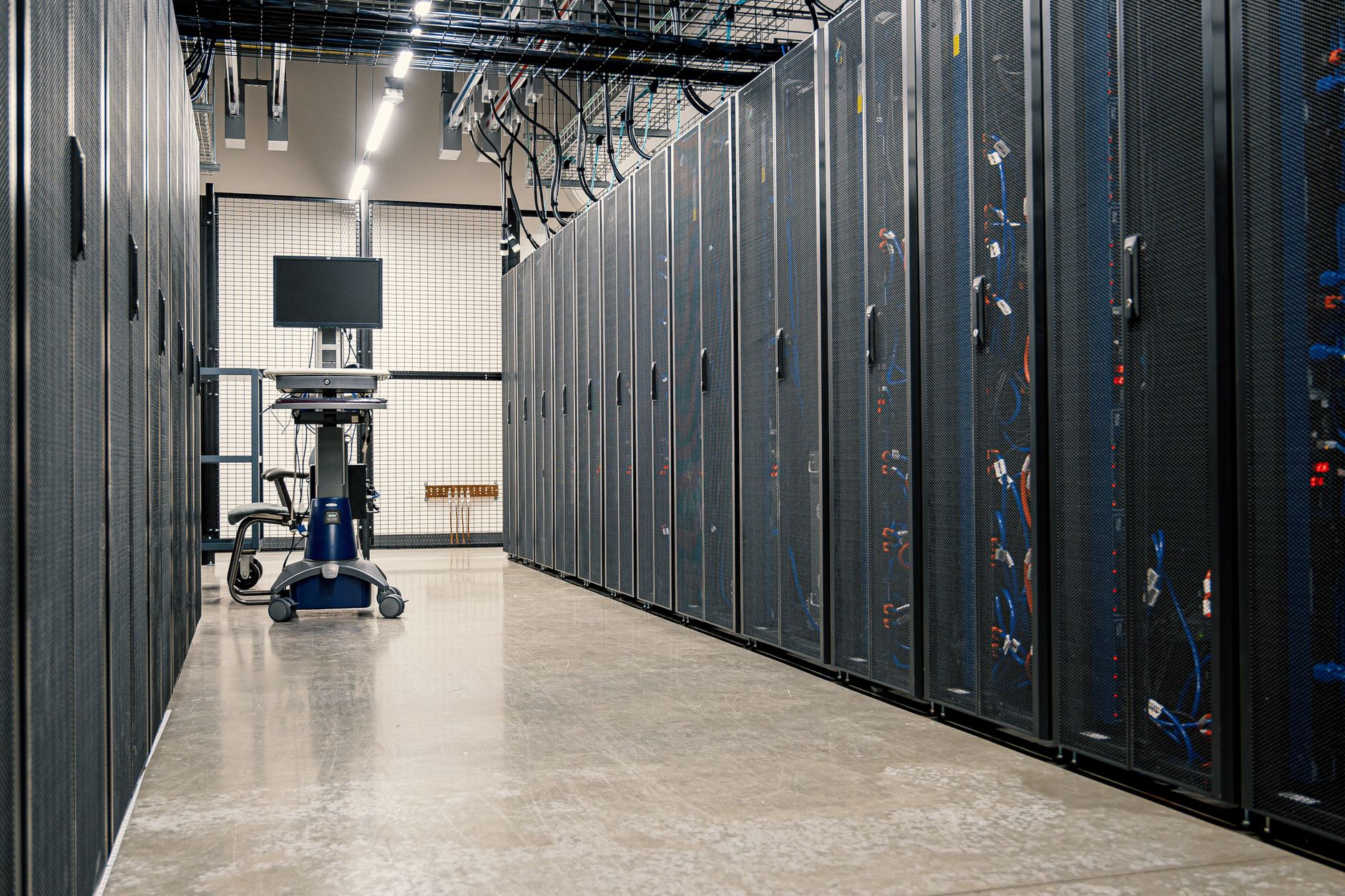
Understanding Colocation Hosting for High-Security E-Commerce

Modern e-commerce enterprises operating in Ukraine face complex challenges, particularly when balancing the urgent need for absolute data sovereignty with uncompromising demands for transaction speed and defense against malicious actors. When a high-traffic online store scales past the limitations of traditional shared hosting, virtual private servers (VPS), or standard cloud instances, it frequently encounters architectural bottlenecks. Standard cloud environments, while flexible, can introduce unpredictable latency, noisy neighbor issues, and regulatory compliance hurdles regarding where sensitive payment data physically resides. To mitigate these risks, large-scale digital retailers increasingly turn to specialized infrastructure strategies, as detailed in broader industry evaluations like the Best E-Commerce Hosting in Ukraine 2026 Ultimate Guide. At the pinnacle of this infrastructural evolution lies colocation hosting, a model that grants growing digital merchants supreme command over their physical technology stack without requiring the monumental capital expenditure of building proprietary data facilities.
At its core, colocation hosting means an online store purchases and owns its dedicated physical servers, routers, and firewalls, but rather than housing them in a makeshift office backroom, the business places these hardware assets inside a professional third-party data center. The facility provider assumes responsibility for the foundational environmental infrastructure—supplying redundant power feeds, advanced climate control systems, high-bandwidth carrier-neutral network connectivity, and rigorous physical security protocols. This division of labor allows e-commerce operations to maintain absolute administrative, security, and hardware-level control over their computing environment, ensuring that no multi-tenant virtualization layers compromise database read/write speeds or introduce undocumented security vulnerabilities. For a deeper understanding of how businesses leverage these structural advantages, many system administrators review foundational resources such as What is Colocation Hosting Benefits for Businesses, which outlines the operational economics of migrating away from on-premises server rooms.
For e-commerce, colocation is primarily used when the business needs full control over hardware and operating systems but still wants enterprise data-center security. Online retail operations deal with sensitive PCI-DSS compliance mandates, storing customer credit card tokens, personal identifiable information (PII), and proprietary inventory databases. In a shared or public cloud setup, compliance audits can become convoluted due to shared responsibility models. Conversely, when an online merchant utilizes dedicated hardware in a secure colocation facility, they dictate the exact encryption algorithms, kernel-level security patches, and hardware security modules (HSMs) utilized. Furthermore, retail platforms frequently experience massive, unpredictable traffic spikes during seasonal promotional events like Black Friday, Cyber Monday, or localized holiday shopping surges. Having dedicated bare-metal servers hosted in a robust data center ensures that computing resources are never throttled by competing tenants, delivering the sub-millisecond response times required to maintain high conversion rates and prevent shopping cart abandonment.
As a retail enterprise expands, its computational footprint must scale accordingly without triggering structural disruptions or expensive hardware migrations. Colocation providers accommodate this dynamic growth by offering highly flexible accommodation tiers, typically categorized into single-server placements, half-cabinet units, full-cabinet enclosures, and dedicated secure cage spaces. This modular approach lets stores scale security and footprint as they grow, transitioning smoothly from a single 1U rackmount server to entire locked server racks, or even private, walled-off data center cages equipped with biometric access controls and dedicated CCTV surveillance.
To visualize how these scaling options map to various stages of e-commerce maturity, consider the following breakdown of typical colocation footprint configurations used by modern online merchants:
| Colocation Tier | Typical Hardware Capacity | Ideal E-Commerce Business Stage | Security and Access Level |
|---|---|---|---|
| Single-Server (1U–4U) | 1 to 4 rackmount servers | Growing mid-sized online store with dedicated database needs | Shared locked rack; facility staff handles physical swaps |
| Half-Cabinet (20U–21U) | Up to 10 standard servers + switches | High-growth merchant with redundant web and database nodes | Dedicated locked compartment; controlled keycard access |
| Full-Cabinet (42U) | 20 to 40+ high-density servers | Large regional e-commerce enterprise and high-volume marketplaces | Entirely private locked cabinet; customized power metering |
| Cage Space | Multiple custom racks, private rows | Enterprise retail conglomerates with strict compliance audits | Dedicated enclosed cage; multi-factor biometric and pin access |
By utilizing these granular scaling steps, growing online retailers can incrementally invest in infrastructure precisely when revenue justifies the expansion. Rather than tying up millions of hryvnias in real estate acquisition, industrial-grade HVAC installation, and diesel generator maintenance, merchants pay a predictable monthly operational fee for space, power, and bandwidth. This financial model frees up vital capital that can be redirected toward marketing, supply chain optimization, and user experience enhancements, while specialized providers like those highlighted in eCommerce Solutions Enterprise Online Stores ColoCrossing ensure that the underlying infrastructure remains resilient against physical threats, power grid fluctuations, and network anomalies.
Physical Security and Access Control Standards in Modern Data Centers
When operating a high-stakes online retail platform, the conversation surrounding cybersecurity often focuses heavily on software firewalls, encrypted databases, and DDoS mitigation. However, seasoned infrastructure architects know that digital safety is fundamentally anchored in physical reality. A malicious actor with direct, physical access to a hardware rack can bypass sophisticated operating system permissions, extract cryptographic keys, or siphon sensitive customer data straight from storage drives in a matter of minutes. This stark vulnerability explains why scaling digital storefronts increasingly move away from improvised office server closets and transition toward enterprise-grade colocation environments. Professional facilities designed for Ultra Secure Co Location Services Cyberfort establish an uncompromising, multi-layered security perimeter that standard office spaces simply cannot replicate.
The foundation of modern data center physical security relies on a defense-in-depth philosophy, where entry into the facility is controlled through concentric rings of escalating security checkpoints. Unlike a standard corporate office where employees might wander freely with a standard keycard, a Tier III or Tier IV colocation facility treats every square foot as a potential vulnerability. Perimeter security typically starts well beyond the exterior walls with reinforced concrete barriers, anti-ram vehicle bollards, and specialized architectural designs intended to mitigate blast impacts. Access roads are monitored continuously, and entry gates require multi-factor authentication before vehicles can approach the loading docks. Once inside the perimeter, visitors and engineers must navigate a tightly controlled series of airlock mantrap portals. These interlocking doors ensure that tailgating—the unauthorized practice of following closely behind an authorized person—is physically impossible, as the first door must fully close and lock before the second door will open.
Inside the facility, visitor management is heavily regulated through advanced biometric entry systems and digital logging. Authorized e-commerce systems administrators cannot simply flash a badge; they must clear several biometric verification hurdles, which commonly combine high-resolution facial recognition, fingerprint scanners, or iris-scanning technology. These systems cross-reference real-time biological data against strict access control lists (ACLs) that dictate precisely which zones, rows, and individual server cages a specific individual is permitted to enter. For growing digital businesses that require specialized infrastructure configurations, understanding how to select a robust facility is paramount, a process further detailed in a comprehensive Colocation Data Center Selection Guide for Online Retailers firstcolo. Furthermore, every single access event—whether successful or denied—is time-stamped, logged, and permanently archived for audit compliance, ensuring complete accountability for who touches the hardware housing sensitive transaction histories and payment card data.
Surveillance within these enterprise environments operates on a scale far beyond standard commercial security setups. Closed-circuit television (CCTV) networks blanket the facility, featuring high-definition, pan-tilt-zoom (PTZ) cameras with infrared night-vision capabilities. These cameras are strategically positioned to cover every blind spot, corridor, entrance point, and individual server rack aisle. Crucially, the video feeds are not merely recorded; many modern data centers utilize computer vision and AI-driven behavior analytics to automatically flag anomalies, such as an individual lingering too long near a foreign rack or attempting to tamper with environmental controls. This round-the-clock optical vigilance is backed by dedicated, on-site security personnel who monitor the feeds from centralized command centers 24 hours a day, 365 days a year. If an alert is triggered, security teams can respond physically to the exact location within minutes, neutralizing potential threats before any hardware or data can be compromised.
To better understand how these rigorous physical controls integrate with broader operational strategies—especially for businesses managing massive spikes in seasonal web traffic—it is helpful to evaluate infrastructural scalability alongside hardware protection. For instance, optimizing your underlying server configuration alongside secure physical housing is a critical consideration for modern merchants, as explored in discussions surrounding Dedicated Server Hosting for High-Traffic E-Commerce in 2026. By pairing robust physical safeguards with performant, dedicated hardware, online retailers create a resilient foundation that protects customer trust, upholds strict regulatory compliance standards like PCI-DSS, and prevents catastrophic downtime caused by unauthorized physical intrusion or tampering.
Compliance Frameworks: PCI-DSS, SOC, and ISO Certifications for Retail
Navigating the regulatory landscape of high-stakes e-commerce requires far more than basic firewalls and SSL certificates. For online stores that process massive volumes of card payments, personally identifiable information (PII), and proprietary customer data, infrastructure security is directly tied to legal liability and financial survival. When scaling operations or migrating enterprise systems away from shared or public cloud architectures, merchants must look closely at infrastructure-level regulations. Establishing a robust security posture begins at the physical and network levels, making the choice of infrastructure partner paramount—a concept explored further in our comprehensive guide on How to Choose E-Commerce Hosting in 2026 Expert Guide. Retailers cannot afford to treat compliance as an afterthought; instead, it must be embedded into the foundation of their hosting strategy through rigorous international frameworks and standardized certifications.
At the heart of transaction security lies the Payment Card Industry Data Security Standard (PCI-DSS). For any retail platform storing, processing, or transmitting cardholder data, adhering to PCI-DSS is non-negotiable, carrying steep financial penalties and potential bans from processing networks in the event of a breach. Meeting these stringent demands on standard commodity hardware or unvetted hosting infrastructure is notoriously difficult. This is why utilizing PCI DSS Standard Compliant Hosting Provider facilities changes the equation for scaling merchants. A truly PCI-DSS-compliant colocation environment enforces strict perimeter security, multi-factor authentication for server rack access, continuous log monitoring, and rigorous network segmentation. By deploying private server hardware inside a data center designed from the ground up for transaction security, retailers inherit a pre-validated physical and environmental security baseline that satisfies a major portion of the overall PCI-DSS assessment checklist.
Beyond payment card security, enterprise-grade e-commerce merchants must evaluate broader operational and informational security credentials. When evaluating data center operators across Europe and domestic markets, security teams frequently rely on internationally recognized frameworks as definitive trust signals. The most critical certifications to look for include:
- ISO/IEC 27001: The global benchmark for information security management systems (ISMS), ensuring the facility implements systematic risk management, robust access controls, and continuous threat mitigation.
- ISO 9001: Validates the data center operator’s commitment to quality management systems, guaranteeing consistent service delivery, reliable environmental controls (such as HVAC and uninterrupted power supplies), and rigorous operational procedures.
- SOC (Service Organization Control) Reports: Specifically SOC 1 and SOC 2 Type II reports, which provide independent, third-party verification of internal controls related to security, availability, processing integrity, confidentiality, and privacy over a sustained testing period.
Choosing a facility that holds these credentials—such as a modern Colocation London ISO 27001 Data Centre 24 7 UK Support CWCS—eliminates vast swathes of operational guesswork. It proves that the physical data halls, cooling infrastructure, power distribution units, and on-site security personnel adhere to documented, audited international standards.
The primary business advantage of leveraging a pre-certified colocation facility is the dramatic acceleration and simplification of regulatory audits. Under standard compliance models, an online retailer must audit every single layer of their stack, including physical data center access logs, camera footage retention policies, visitor management systems, and environmental redundancy protocols. When your private servers reside within a facility that already maintains active ISO 27001, SOC 2, and PCI-DSS attestations, the burden of proof shifts. Your external QSA (Qualified Security Assessor) or internal compliance officer can directly inherit the data center provider’s attestation of compliance (AoC) or report on controls (RoC) for all physical and environmental testing domains.
| Compliance Standard | Primary Focus Area | Benefit for E-Commerce Colocation |
|---|---|---|
| PCI-DSS | Cardholder data security & network isolation | Drastically reduces scope for payment processing audits. |
| ISO 27001 | Information security management systems | Validates comprehensive risk management and data privacy protocols. |
| SOC 2 Type II | Operational controls over time (security, availability) | Proves continuous uptime reliability and secure data handling to stakeholders. |
| ISO 9001 | Quality management & facility operations | Guarantees superior physical infrastructure reliability (power, cooling, maintenance). |
Ultimately, integrating compliance frameworks into a colocation strategy is an investment in brand equity and operational resilience. For high-growth online retailers operating in competitive European and regional markets, security is no longer just a technical metric—it is a core marketing and trust differentiator. By housing proprietary rack infrastructure within certified data centers, merchants streamline their regulatory compliance paths, protect sensitive consumer data against sophisticated modern threats, and build an unbreakable foundation for enterprise e-commerce expansion.
Network Performance, Low Latency, and High-Availability Infrastructure

In the hyper-competitive landscape of digital commerce, milliseconds directly dictate conversion rates, customer retention, and brand loyalty. When operating high-traffic retail storefronts with stringent security requirements, standard shared or virtual private server hosting quickly proves inadequate. Low latency is a key selling point for online retail, especially for high-traffic storefronts and payment systems that need fast response times where every fractional second of delay increases shopping cart abandonment. E-commerce platforms processing thousands of concurrent transactions cannot afford the micro-stutters, jitter, or packet loss inherent in consumer-grade or poorly provisioned network pathways. To maintain optimal throughput, businesses increasingly turn to specialized data center environments that offer enterprise-grade carrier neutrality and direct fiber connectivity to major internet exchanges.
The technical architecture underpinning professional colocation facilities is meticulously engineered to eliminate single points of failure. High-availability infrastructure and resilient connectivity are repeatedly highlighted as core benefits for e-commerce colocation, ensuring that online stores remain accessible even under the crushing traffic spikes of events like Black Friday, Cyber Monday, or unexpected viral marketing campaigns. Within these facilities, network operations centers monitor bandwidth utilization and routing tables in real time, dynamically shifting traffic across redundant Tier-1 carrier backbones. This multi-homed approach guarantees that if one upstream provider experiences a routing anomaly or physical fiber cut, traffic seamlessly reroutes through an alternate path without dropping active user sessions or corrupting ongoing database transactions.
Furthermore, payment gateway integrations demand exceptionally strict latency thresholds. When a customer inputs their credit card credentials, the front-end server must securely communicate with third-party anti-fraud APIs, tokenization engines, and banking clearinghouses within milliseconds. Any lag in this secure handoff can result in gateway timeouts, triggering frustrating error screens for the consumer and lost revenue for the merchant. By housing your proprietary hardware within a dedicated colocation rack, you position your application servers physically closer to the core internet peering points and financial networks. This proximity minimizes network hops, drastically reducing round-trip time (RTT) and ensuring that secure checkout workflows execute with lightning speed.
| Performance Metric | Consumer/Standard Hosting | Enterprise Colocation Facility |
|---|---|---|
| Average Latency (RTT) | 50ms – 120ms | 5ms – 20ms |
| Network Redundancy | Single ISP, potential bottlenecks | Multi-homed BGP routing, 10Gbps+ uplinks |
| Uptime SLA | 99.0% to 99.9% (frequent maintenance windows) | 99.999% (fault-tolerant, concurrent maintainability) |
| Power Protection | Basic UPS (short battery backup) | N+1 / 2N generators, redundant power paths |
Beyond pure network routing, absolute high availability requires absolute power continuity. Power fluctuations, voltage sags, or localized black catastrophically disrupt online store operations, instantly shutting down web servers and corrupting active database writes. Professional colocation data centers mitigate this risk through robust, enterprise-grade electrical engineering. Facilities deploy continuous uninterruptible power supply (UPS) systems paired with industrial diesel generators capable of sustaining full operational loads indefinitely during extended grid outages. These systems feature redundant paths—often configured in N+1 or 2N topologies—meaning that every critical component has a fully operational secondary backup ready to assume the load instantly if primary hardware fails. For merchants evaluating long-term technical strategies, aligning infrastructure with modern industry benchmarks is vital, as detailed in resources like the Best Hosting for Online Stores in 2026 Complete Guide.
Maintaining this rigorous standard of operational continuity also extends to environmental controls and physical hardware isolation. High-density server deployments running complex e-commerce catalog searches, real-time inventory synchronization, and cryptographic security protocols generate immense thermal loads. Data centers utilize advanced cold-aisle/hot-aisle containment systems alongside precision cooling units to maintain optimal ambient temperatures, preventing thermal throttling that can degrade processor performance during peak traffic surges. When hardware operates within stable, temperature-controlled environments backed by uninterrupted power and multi-layered network redundancy, online retailers can focus entirely on scaling their commercial operations rather than firefighting unexpected infrastructure outages. For businesses looking to scale their digital footprint, utilizing specialized Ecommerce Website Hosting and Scalable E Commerce Solutions XLC frameworks ensures that architectural growth matches consumer demand. Ultimately, combining low-latency routing with a fault-tolerant, high-availability colocation framework creates an impenetrable foundation capable of sustaining elite e-commerce performance under any circumstances.
Scaling for Peak Trading Periods and Disaster Recovery
For modern high-security online retailers, managing web traffic volatility is a constant balancing act. When major promotional events arrive—such as Black Friday, Cyber Monday, or unexpected flash sales driven by viral social media campaigns—e-commerce platforms face unprecedented surges in concurrent user requests, database queries, and transaction processing loads. Relying on traditional, rigid in-house server rooms during these critical windows often leads to catastrophic performance bottlenecks, hardware overheating, or complete site crashes. In contrast, leveraging an enterprise-grade colocation environment provides online merchants with the structural agility needed to absorb massive traffic spikes without demanding the prohibitive financial and logistical overhead of permanent physical facility expansions.
One of the primary structural advantages of professional colocation for high-demand retail environments is the capability to execute rapid, short-term infrastructure scaling. When utilizing a premier data center facility, e-commerce brands can dynamically provision extra bandwidth, deploy additional server racks, or integrate auxiliary compute capacity on demand. Rather than waiting months to construct additional on-premise server closets, purchase supplementary enterprise hardware, and upgrade building-level utility feeds, retailers can coordinate with their data center provider to spin up pre-configured modular units or cross-connect into scalable hybrid cloud environments. This elastic approach ensures that web stores can seamlessly handle a 500% to 1,000% increase in transactional throughput during peak trading periods, and then instantly scale back down once the seasonal rush subsides, optimizing capital expenditure and operational budgets. For deeper insights into how modern architectures stack up, reviewing resources like the Best E-Commerce Hosting Providers 2026 Ultimate Comparison highlights the shifting priorities of digital storefronts toward maximum flexibility.
Beyond mere compute elasticity, peak retail seasons introduce extreme physical stress to server hardware. As central processing units and graphics processors operate at maximum capacity for days on end to render product pages, process payments, and update inventory databases in real time, heat dissipation becomes a critical vulnerability. Professional colocation facilities eliminate this risk by employing state-of-the-art climate control systems, including hot/cold aisle containment, precision air handlers, and redundant industrial chillers. These advanced environmental controls ensure that even when servers are pushed to their absolute limits under heavy workloads, thermal throttling and hardware degradation are entirely prevented. Furthermore, these robust infrastructural frameworks align closely with broader industry methodologies, as detailed in comprehensive analyses on Retail and Ecommerce Colocation Solutions Scaling Infrastructure.
Redundant Power Systems and Business Continuity
Operational resilience extends far beyond temperature regulation; uninterrupted power delivery is the absolute lifeblood of high-security retail infrastructure. A split-second power sag or a localized grid failure during a peak checkout window can translate into millions of dollars in abandoned carts, lost revenue, and severe brand erosion. Top-tier colocation facilities mitigate these catastrophic scenarios by implementing multi-tiered power redundancy. This typically includes dual enterprise-grade Uninterruptible Power Supply (UPS) systems backed by on-site diesel generators capable of sustaining full operational loads indefinitely during extended municipal grid outages.
| Power Infrastructure Component | Standard In-House Server Room | Enterprise Colocation Data Center |
|---|---|---|
| Grid Feed | Single utility feed (vulnerable to local drops) | Dual, redundant high-capacity feeds from separate sub-stations |
| Backup Power | Small battery unit (limits runtime to minutes) | Industrial UPS arrays + heavy-duty on-site diesel generators |
| Cooling Redundancy | Basic commercial AC units (single point of failure) | N+1 or 2N precision cooling architecture with automated failover |
| SLA Guarantees | None or minimal internal targets | Contractually backed 99.999% uptime guarantees |
When disaster recovery protocols are tested by extreme weather events, grid instability, or cyber-physical threats, the architectural superiority of a professional facility becomes indisputable. By integrating carrier-neutral network architectures, robust perimeter security, and continuous environmental monitoring, data centers ensure that sensitive customer data and payment processing nodes remain completely secure and accessible. Organizations looking to expand their secure perimeter often integrate these physical safeguards with advanced network topologies, leveraging specialized services such as those outlined by Colocation Services Secure Data Centers for Hybrid Cloud. Ultimately, combining short-term compute elasticity with elite physical and environmental redundancy empowers online retailers to navigate peak trading periods with absolute confidence, protecting both their immediate revenue streams and their long-term customer trust.
Hybrid Infrastructure: Combining Colocation with Cloud Services
Modern e-commerce architectures have evolved far beyond the binary choice of maintaining a purely on-premise data center or migrating entirely to a public cloud provider. For high-volume online stores dealing with sensitive financial data, strict compliance mandates, and unpredictable traffic spikes, a rigid infrastructure model often creates bottlenecks. To achieve the ideal balance of ironclad security, regulatory compliance, and elastic scalability, industry leaders increasingly turn to hybrid infrastructure models. These deployments seamlessly combine the predictable, high-performance nature of traditional server colocation with the agile, on-demand resources of private and public clouds.
At the core of this architectural strategy is a division of labor based on workload characteristics. Enterprise-grade online stores typically rely on dedicated physical hardware housed in secure data centers for their most critical operations. By housing core database servers and payment processing engines within a controlled colocation facility, merchants ensure that sensitive customer data and high-security transaction processing never leave dedicated, bare-metal environments. This approach satisfies strict Payment Card Industry Data Security Standard (PCI-DSS) requirements and other data privacy regulations while offering an exceptional level of physical security that multi-tenant cloud environments occasionally struggle to match. Furthermore, colocation is widely recognized as a cost-effective way to maintain enterprise-grade infrastructure at predictable monthly operational costs, avoiding the sudden, unpredictable billing spikes frequently associated with data-heavy public cloud egress fees.
However, while a dedicated database backend thrives in a static, high-security colocation cage, the front-end components of a modern e-commerce platform require a completely different operational philosophy. E-commerce traffic is notoriously volatile, influenced by flash sales, seasonal holidays, viral marketing campaigns, and unforeseen media mentions. Maintaining enough physical server capacity in-house to handle peak holiday traffic year-round is cost-prohibitive and structurally inefficient. This is where integrating cloud services into the hybrid ecosystem becomes exceptionally powerful. By leveraging public or private cloud resources to host the storefront’s web presentation layer, content delivery networks (CDNs), and microservices, an online store gains the ability to scale its front-end capacity dynamically within seconds.
Implementing a successful hybrid e-commerce architecture requires careful planning around network connectivity and data latency. Because the front-end application servers running in the cloud must constantly communicate with the core database engine sitting in the colocation facility, establishing a low-latency, highly secure interconnect is paramount. Many modern data center operators provide direct fiber cross-connects or virtual private cloud (VPC) peering services that link the colocation cage directly to major cloud providers like Amazon Web Services, Microsoft Azure, or Google Cloud Platform. This ensures that database queries executed by cloud-based web servers return to the physical colocation hardware with minimal latency, preserving a responsive user experience even during periods of intense transaction volume. For smaller merchants exploring scalability options, studying broader trends such as the Best Cloud Hosting for Small Online Stores 2026 can provide valuable insights into how cloud elements can be progressively introduced into a growing retail ecosystem.
To visualize how responsibilities are distributed across a well-designed hybrid e-commerce framework, consider the following functional breakdown:
| Infrastructure Layer | Deployment Model | Primary Purpose & Benefits |
|---|---|---|
| Core Database & Ledger | Colocation (Bare Metal) | Predictable performance, maximum data security, strict regulatory compliance, fixed costs. |
| Payment Processing & Tokenization | Colocation (Dedicated Hardware) | Isolated PCI-DSS compliant environment, zero noisy-neighbor risks, direct HSM integration. |
| Storefront Web Tier | Public / Private Cloud | Elastic scalability, rapid provisioning during traffic surges, global load balancing. |
| Static Assets & Media | Cloud CDN & Object Storage | Low-latency global content delivery, reduced bandwidth strain on primary servers. |
Adopting this hybrid approach also serves as an effective risk mitigation strategy. In the event of an unexpected regional cloud outage, a robustly configured hybrid setup can often maintain core database integrity and back-office operations, or failover gracefully without taking down the entire enterprise ecosystem. Conversely, if a local power fluctuation or hardware maintenance cycle affects the physical data center, cloud-based caching layers can occasionally serve static catalog pages to browsing customers while engineers resolve the issue.
Ultimately, combining traditional colocation with modern cloud services empowers e-commerce brands to stop choosing between performance and flexibility. By anchoring high-security transactions in reliable, enterprise-grade server hosting environments while outsourcing front-end scalability to the cloud, online retailers build a resilient, future-proof foundation capable of sustaining rapid business growth and maintaining absolute customer trust.
Common Pitfalls When Selecting a Colocation Provider for E-Commerce

Selecting a colocation facility for a high-security online store requires meticulous strategic planning, yet many e-commerce brands continuously fall into preventable operational traps. A common mistake is choosing a provider without verifying compliance, physical security, and upgrade paths, which can create risk during traffic spikes or audits. When a high-volume retail platform experiences a sudden surge in traffic—such as during holiday shopping seasons or flash sales—infrastructure deficiencies become glaringly apparent. E-commerce managers often focus solely on baseline rack space costs and raw bandwidth pricing while overlooking critical long-term operational nuances that ultimately determine platform stability, payment card industry data security compliance, and customer trust.
Neglecting Compliance Certifications and Regulatory Audits
One of the most dangerous missteps online retail businesses make during the provider selection phase is failing to rigorously verify third-party compliance certifications. E-commerce operations that process sensitive customer payment data must strictly adhere to regulations such as the Payment Card Industry Data Security Standard (PCI-DSS), ISO/IEC 27001, and local data protection frameworks. Choosing a facility that lacks documented, up-to-date audit reports can instantly invalidate an online store’s security posture. When conducting due diligence, decision-makers should request explicit proof of SOC 2 Type II compliance and verify whether the facility undergoes regular, independent third-party penetration testing. Failing to secure a certified environment can lead to catastrophic financial penalties, reputational damage, and legal liabilities in the event of a security breach. For a broader perspective on architectural frameworks and infrastructure planning, reviewing resources like the Best Colocation Providers A Technical Deep Dive can help technical teams evaluate enterprise-grade data center credentials.
Overlooking Inadequate Physical Security Audits
While digital defenses like firewalls and intrusion detection systems receive immense attention, physical security is the first line of defense for e-commerce server hardware. A critical mistake is accepting a provider’s marketing claims regarding physical security at face value without conducting a rigorous on-site audit. E-commerce managers must inspect multi-factor authentication systems, biometric entry checkpoints, 24/7 closed-circuit television (CCTV) coverage with long retention periods, and strict mantrap protocols. Furthermore, server cages and rack locks must offer tamper-proof protection against unauthorized internal or external access. If a facility lacks stringent visitor logging procedures or employs lax security guard rotations, proprietary customer databases and financial transaction logs housed on physical servers remain fundamentally vulnerable to physical tampering and theft.
Failing to Plan Scalability and Upgrade Paths
E-commerce businesses are inherently dynamic; successful digital storefronts experience rapid catalog expansion, database scaling, and massive traffic spikes. A frequent oversight when contracting a data center partner is locking into rigid, short-term lease agreements that lack clear, pre-negotiated upgrade paths for power density, cooling capacity, and network bandwidth. Many facilities are constrained by legacy electrical designs that cannot support modern high-density server blades, leaving retailers stranded when their computing requirements scale.
To prevent costly mid-contract migrations or downtime, e-commerce architects should evaluate expansion metrics against predictable business growth models. When mapping out your digital infrastructure roadmap, consider insights from Choosing Ecommerce Hosting in 2026 The Ultimate Guide to align your colocation choices with upcoming industry standards and scalability demands.
Actionable Advice for Ukrainian E-Commerce Managers
For online retail organizations operating within the Ukrainian market, ensuring long-term operational stability and strict security compliance requires a localized, resilient approach. Technical managers should implement the following checklist:
- Verify Power Redundancy: Ensure the facility features N+1 or 2N uninterruptible power supply (UPS) systems and robust, tested diesel generators capable of sustaining multi-day grid outages without interruption.
- Insist on Carrier-Neutral Connectivity: Avoid single-vendor lock-in by selecting facilities with multiple independent fiber-optic carriers to guarantee high availability and low latency for regional and international shoppers.
- Draft Comprehensive Service Level Agreements (SLAs): Ensure your contract includes financially backed guarantees for 99.999% uptime, rapid remote-hands response times for hardware troubleshooting, and guaranteed power availability metrics.
- Plan for Disaster Recovery: Establish geo-redundant backup strategies, ensuring that critical transactional logs are replicated to a secondary, geographically distinct facility outside high-risk zones.
By systematically avoiding these prevalent pitfalls and prioritizing compliance, robust physical security, and flexible scalability, e-commerce brands can secure a resilient technological foundation that withstands traffic surges and regulatory scrutiny alike.
